



Close Menu
    Facebook X (Twitter) Instagram
    Iceland Review
    Facebook Instagram YouTube
    • News
      • Society
      • Politics
      • Culture
      • Economy
      • Nature
    • Culture
      • Opinions & Columns
      • Ask Iceland Review
      • In Focus
      • Interviews
    • Travel
      • Practical Information
      • Wildlife & Nature
      • History & Culture
      • Driving & Itineraries
      • Local Attractions
      • Tours & Activities
      • Food & Drink
      • Accommodation
    • Book Tours
    Iceland Review
    News | Society | COVID-19 in Iceland: Vaccination Has Not Led to Herd Immunity, Says Chief Epidemiologist
    News

    COVID-19 in Iceland: Vaccination Has Not Led to Herd Immunity, Says Chief Epidemiologist

    Jelena ĆirićBy Jelena ĆirićAugust 3, 2021No Comments6 Mins Read
    Share Facebook Twitter Pinterest LinkedIn Tumblr Email
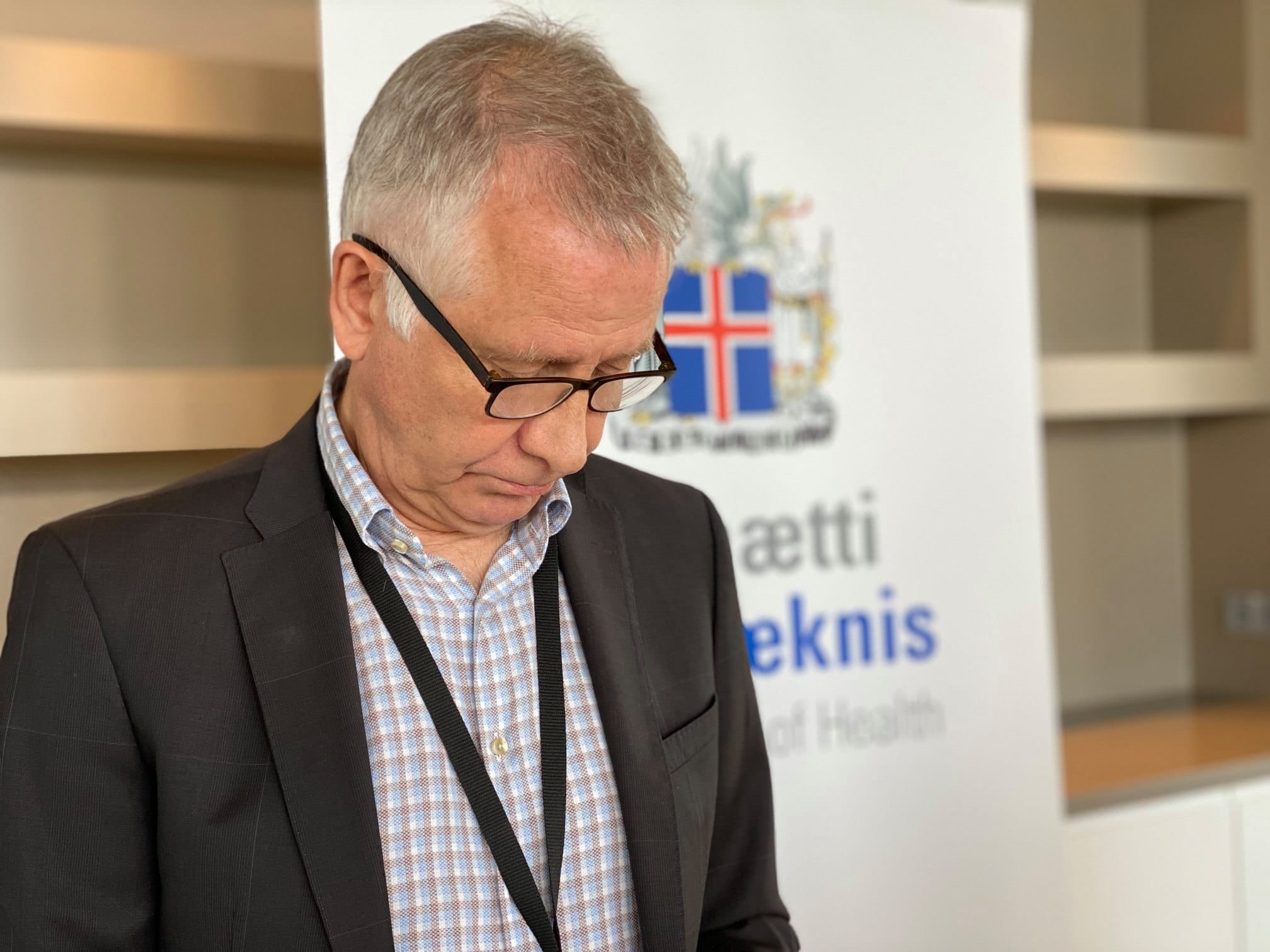
    Chief Epidemiologist Þórólfur Guðnason
    Almannavarnir / Facebook
    Share
    Facebook Twitter LinkedIn Pinterest Email
    Advertisements

    While data shows vaccination is reducing the rate of serious illness due to COVID-19 in Iceland, the country’s Chief Epidemiologist Þórólfur Guðnason says it has not led to the herd immunity that experts hoped for. In the past two to three weeks, the Delta variant has outstripped all others in Iceland and it has become clear that vaccinated people can easily contract it as well as spread it to others, Þórólfur stated in a briefing this morning.

    The current social restrictions will remain in place until August 13. The Chief Epidemiologist says the government must make the final call on next steps in response to the current wave of infection. Health authorities have sent a formal memorandum to the government expressing concern about the heavy strain on the healthcare system cause by the current record rate of infection.

    The following is a lightly-edited transcription of Iceland Review’s live-tweeting of the briefing.


    On the panel: Director of Civil Protection Víðir Reynisson and Chief Epidemiologist Þórólfur Guðnason.

    Yesterday’s numbers have been updated on covid.is. Iceland reported 108 domestic cases (38 in quarantine) and 1 at the border. Total active cases are at a record 1,304. 16 are in hospital.

    The briefing has begun. Víðir begins by saying that the long weekend has passed without any large violations of regulations but it will only come to light in a week or two whether the gatherings last weekend have led to infections.

    Þórólfur takes over. He reviews the reason restrictions were lifted last June: at the time infection rates were very low, a majority of the nation was vaccinated and there were regulations at the border ensuring a minimum of infections would cross the border. Vaccination rates are high in most groups, though only 10% of those 12-16 have been vaccinated.

    What has happened in the past two to three weeks is that the Delta variant has taken over all other variants in Iceland. And it has come to light that vaccinated individuals can contract it relatively easily and spread infection. Sequencing has shown us that the origin of most domestic infections can be traced to group events such as clubbing in downtown Reykjavík or group trips abroad. We’ll have to wait and see whether the current restrictions will suffice in curbing this current wave.

    There are however indications that vaccination is preventing serious illness. Around 24 have had to be hospitalised in this wave, just over 1%. In previous waves, that figure was 4-5%. However, 2.4% of unvaccinated people that contract COVID-19 now are hospitalised.

    Authorities have decided to offer those who received the Janssen vaccine a booster shot of Pfizer. There are plans to offer 12- to 15-year-olds vaccination in the near future as well. There are still some 30,000 unvaccinated people among older groups and they are more at risk. That could cause strain on the healthcare system. We must also consider that there is additional strain on other patients when there are lots of COVID cases, says Þórólfur.

    Þórólfur says we must remember that the COVID-19 pandemic is not close to being over and will not be over until it’s over everywhere. We must be ready to face new challenges that come up in the process. We know what works to curb infection. We can fight COVID-19 if we stand together and reach a consensus on what needs to be done.

    The panel opens for questions. “What needs to happen for you to tighten restrictions, Þórólfur? You don’t sound very positive at the moment.” Þórólfur says he has not decided on measures beyond August 13. He is in discussions with the Health Minister, and it is the government that must decide whether it is necessary to impose tighter restrictions. Þórólfur adds that at this time he will likely make recommendations in a different format than the memorandums he has previously sent to the Health Minister.

    “Can you give us information about how many people were vaccinated among those who have been hospitalised in this wave?” Þórólfur says around half of those hospitalised have been vaccinated. The two that have been placed in the ICU are unvaccinated. It’s not possible to draw broad conclusions from this data but vaccination appears to reduce serious illness generally.

    “What is the reason that you are considering vaccinating children at this time?” Þórólfur says that he has discussed it for some time and children in at-risk groups have already been vaccinated. There is also evidence that the Delta variant causes more serious illness among them.

    “Is there a possibility that children that contract the Delta variant will need hospitalisation?” Þórólfur says that children generally have milder symptoms and none in Iceland have been hospitalised in this wave. However, there is data from abroad of children needing to be hospitalised due to COVID-19.

    “Do you not want to urge the government to strengthen the healthcare system?” Þórólfur says of course, and the Director of Health has discussed that often at these briefings but it doesn’t happen overnight. What we can do in the short term is to curb infection rates, which will reduce strain on the healthcare system. Þórólfur says: We must keep in mind that people can develop long-term symptoms despite not needing hospitalisation from COVID-19 infection. That’s something that we don’t have long-term data for yet but will come to light.

    Þórólfur says health officials have sent a formal memorandum to the government expressing concerns regarding strain on the healthcare system and the National University Hospital. Þórólfur expresses disappointment in the discourse regarding the National University Hospital, he feels the media has been dismissing healthcare workers’ concerns. Healthcare workers are those best positioned to evaluate the hospital’s strain and capacity, he says.

    Þórólfur: our main project now is this wave that we have to tackle. Regarding the borders, we must think long-term about how we can minimise infections crossing the border. Then we must consider how we want things to be domestically and what people’s tolerance is for restrictions. But it’s a fact that the more this wave of infection spreads the harder it will be to contain.

    Víðir takes over to close the briefing. We know what we have to do: prevent infections, and protect the borders so that we can live as freely as possible within Iceland. We can see that many people are out of patience toward restrictions but unfortunately, this is not over. We don’t have to agree on everything but our message must be clear. It is the virus that is the enemy. We must be good to each other and be patient, try to understand where others are coming from, Víðir says. The briefing has ended.

    Advertisements
    Chief Epidemiologist COVID-19 Delta variant Janssen social restrictions vaccination
    Share. Facebook Twitter Pinterest LinkedIn Tumblr Email
    Jelena Ćirić

    Jelena Ćirić is a former contributor to Iceland Review.

    Related Posts

    Low Sun Blamed in Three-Car Crash on Hellisheiði

    September 13, 2026

    Vocational Training Expansion Planned at Fjölbrautaskóli Suðurnesja

    September 13, 2026

    Iceland Plans Major Police Restructuring and New Civil Protection Law

    September 12, 2026

    Comments are closed.

    Latest News

    Low Sun Blamed in Three-Car Crash on Hellisheiði

    September 13, 2026

    Vocational Training Expansion Planned at Fjölbrautaskóli Suðurnesja

    September 13, 2026

    Iceland Plans Major Police Restructuring and New Civil Protection Law

    September 12, 2026

    Dozens Seek Help After Failed Spain Accommodation Bookings

    September 12, 2026

    Icelandic Nursing Homes Turn to AI and Robots as Staffing Shortages Persist

    September 12, 2026
    Popular in Travel

    Fimmvörðuháls Named 10th Toughest Hike by Britain’s PureGym, Which Would Like You to Know This

    Iceland ReviewAugust 12, 2026

    Anyone who has dragged themselves over Fimmvörðuháls may be pleased to learn that the suffering……

    Is Iceland About to Experience a Total Eclipse—and Its Biggest Traffic Jam?

    August 11, 2026

    Sneaking a Peek: Record Cruise Fleet Heads to Iceland

    August 10, 2026

    Affordable Stays in Reykjavík | A Guide to Loft and Dalur Hostels

    July 23, 2026
    About Us
    About Us

    Established in 1963, Iceland Review is the longest-running English-language media outlet covering Iceland.

    Facebook Instagram YouTube
    Most Popular

    Palestine Map Sparks Confrontation at Icelandic Café

    August 16, 2026

    Several Arrested After Fatal Attack in Kópavogur

    August 10, 2026

    French Tourist Removed Route Maps After Off-Road Driving Fine

    June 25, 2026

    Three Young People Killed in Krýsuvíkurvegur Crash

    September 1, 2026
    Popular in Travel

    255-Year-Old Coin Linked to Sveinn Pálsson Found in Öræfi

    September 7, 2026

    New Geothermal Bathing Lagoon Opens in Hveragerði

    September 7, 2026

    Gas Pollution Persists at Múlakvísl as Conductivity Remains Elevated

    September 4, 2026

    Skip the Line: Keflavík Fast-Track Security Is Now Open to Everyone

    August 27, 2026
    © 2026 Iceland Review
    • About Iceland Review
    • Privacy and Cookie policy

    Type above and press Enter to search. Press Esc to cancel.

    Manage your privacy

    To provide the best experiences, we and our partners use technologies like cookies to store and/or access device information. Consenting to these technologies will allow us and our partners to process personal data such as browsing behavior or unique IDs on this site and show (non-) personalized ads. Not consenting or withdrawing consent, may adversely affect certain features and functions.

    Click below to consent to the above or make granular choices. Your choices will be applied to this site only. You can change your settings at any time, including withdrawing your consent, by using the toggles on the Cookie Policy, or by clicking on the manage consent button at the bottom of the screen.

    Functional Always active
    The technical storage or access is strictly necessary for the legitimate purpose of enabling the use of a specific service explicitly requested by the subscriber or user, or for the sole purpose of carrying out the transmission of a communication over an electronic communications network.
    Preferences
    The technical storage or access is necessary for the legitimate purpose of storing preferences that are not requested by the subscriber or user.
    Statistics
    The technical storage or access that is used exclusively for statistical purposes. The technical storage or access that is used exclusively for anonymous statistical purposes. Without a subpoena, voluntary compliance on the part of your Internet Service Provider, or additional records from a third party, information stored or retrieved for this purpose alone cannot usually be used to identify you.
    Marketing
    The technical storage or access is required to create user profiles to send advertising, or to track the user on a website or across several websites for similar marketing purposes.
    Statistics

    Marketing

    Features
    Always active

    Always active
    • Manage options
    • Manage services
    • Manage {vendor_count} vendors
    • Read more about these purposes
    Manage options
    • {title}
    • {title}
    • {title}
    Manage your privacy
    To provide the best experiences, we use technologies like cookies to store and/or access device information. Consenting to these technologies will allow us to process data such as browsing behavior or unique IDs on this site. Not consenting or withdrawing consent, may adversely affect certain features and functions.
    Functional Always active
    The technical storage or access is strictly necessary for the legitimate purpose of enabling the use of a specific service explicitly requested by the subscriber or user, or for the sole purpose of carrying out the transmission of a communication over an electronic communications network.
    Preferences
    The technical storage or access is necessary for the legitimate purpose of storing preferences that are not requested by the subscriber or user.
    Statistics
    The technical storage or access that is used exclusively for statistical purposes. The technical storage or access that is used exclusively for anonymous statistical purposes. Without a subpoena, voluntary compliance on the part of your Internet Service Provider, or additional records from a third party, information stored or retrieved for this purpose alone cannot usually be used to identify you.
    Marketing
    The technical storage or access is required to create user profiles to send advertising, or to track the user on a website or across several websites for similar marketing purposes.
    Statistics

    Marketing

    Features
    Always active

    Always active
    • Manage options
    • Manage services
    • Manage {vendor_count} vendors
    • Read more about these purposes
    Manage options
    • {title}
    • {title}
    • {title}