










What are considered to be the best books from Iceland? What can they teach us about Iceland’s culture, and the character of its people? And are Icelanders truly as prolific in their writing as it is claimed? Read on to find out all of this and more.
Let’s begin by clarifying Iceland’s historic contributions to world literature. Almost everyone knows about the mediaeval sagas. These were epic tomes that speak of courageous settlers. Reigning Scandinavian kings. And vengeful Norse Gods vying for power.
In short, there is a deep tradition for storytelling here. Modern-day Icelanders continue to write engaging and original works of fiction. In doing so, they sculpt a new place for themselves in the realm of words, grammar, and publishing.
After all, it is said that one in ten Icelanders will publish a book in their lifetime. An admirable stat for such a diminutive population. So what are the reasons behind their affinity for weaving such fanciful tales? Is it that the dark winters provide for plenty of time to sit at the proverbial typewriter? Or maybe their passion for narrative is so ingrained as to be inescapable?
How do Icelanders celebrate their literary roots?
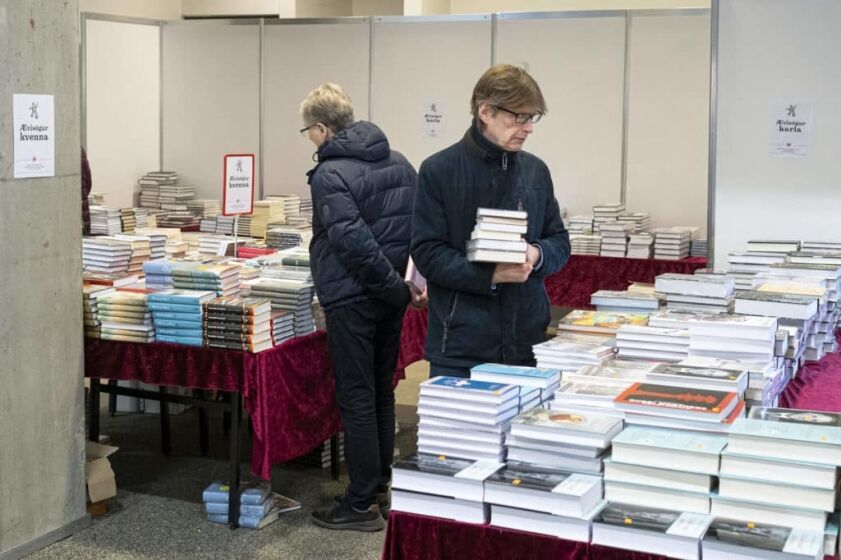
Whatever the case, cultural events like Jólabókaflóð (The Christmas Book Flood) and the Reykjavík International Literary Festival demonstrate just how deep this devotion to the written word has become. And by taking just a small stroll around Reykjavik, you will also spot plenty of bookshops, many of which remain wholly independent and offer a wide selection of titles in both English and Icelandic.
For the sake of this article, let’s focus solely on books that have been translated into English and have made a significant cultural impact. So, what are the most widely celebrated novels to have come out of Iceland over the last century, and what prescient insights about this island’s culture can we glean from their pages?
1) Independent People (1934) by Halldor Laxness
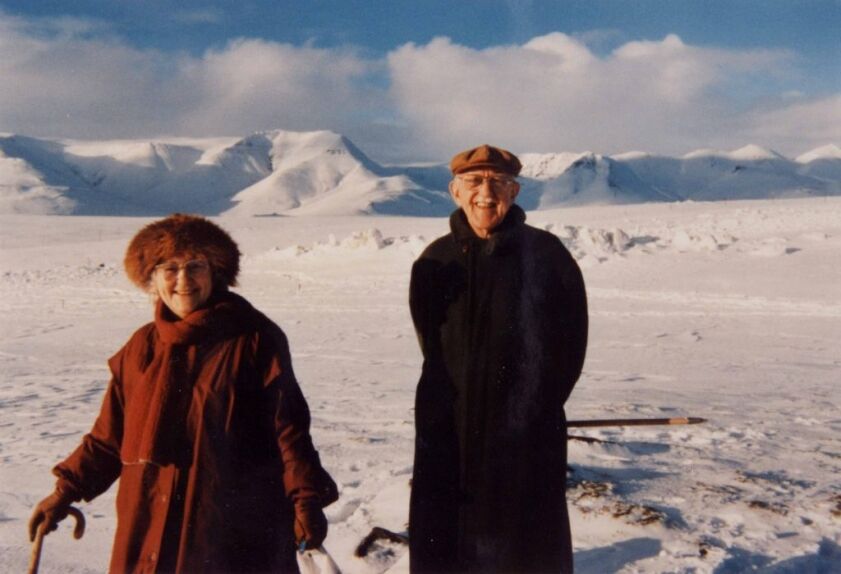
If there is one author who towers above all others in the pantheon of Icelandic writers, it is Halldór Kiljan Laxness. Born in 1902 in Reykjavik, Laxness began writing at an early age, his imagination inflamed by the poetry sang to him by his grandmother.
His first published works appeared in the newspaper, Morgunblaðið, in 1916. His first novel, Barn náttúrunnar (Child of Nature) was released only three years later, beginning what would be a hugely influential, sometimes controversial, but ultimately incredible literary career.
Laxness’ best known work is Independent People, the story of an impoverished farming family struggling to overcome the inhospitality of the landscape, and the prison-bars laid down by a burgeoning capitalist nation.
Originally, the novel was released in two parts and deals with themes of social realism and what, if anything, should be willingly sacrificed to ensure independence of the individual. Presenting a rather bleak view of rural life in Iceland during that time, it is still often said that Independent People is one of the greatest books of the 20th Century.
Quite deservedly, it was Independent People that secured Halldor Laxness the Nobel Prize for Literature in 1955. He remains Iceland’s only Nobel Laureate.
Where can you learn more about Halldor Laxness?
Laxness wrote many other critically-acclaimed books, including The Fish Can Sing (1957) and Salka Valka (1931). While not overly appreciated in his time, another of his books, The Atom Station (1948), was an early example of an urban novel set in Iceland, cementing the framework for later works based in Reykjavik.
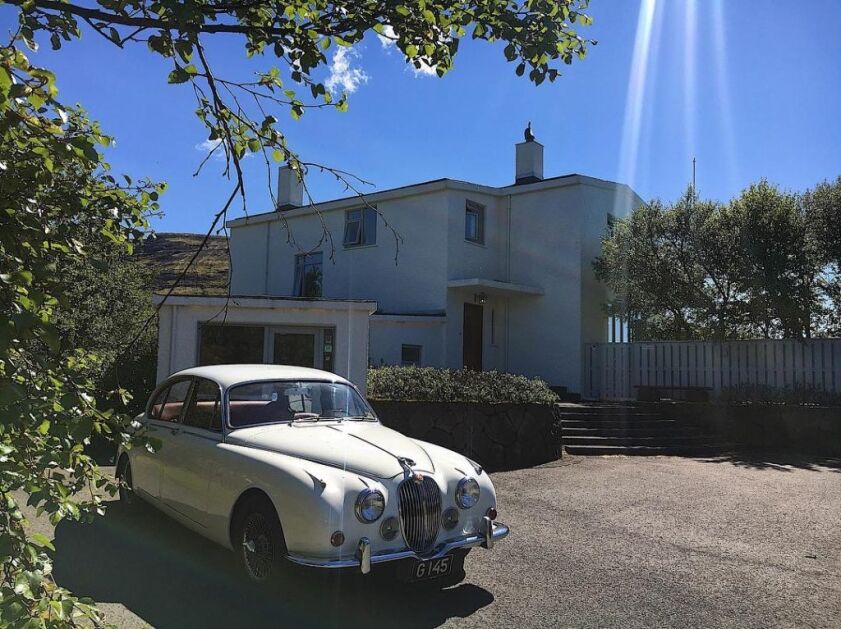
You can discover more about Halldor Laxness at Gljúfrasteinn hús skáldsins, his former home and now museum on the leafy outskirts of Mosfellsbær. This cosy building is a great place to not only learn more about Iceland’s most acclaimed author, but see firsthand how the man lived and worked. Your tour will begin with a brief documentary about his life and output, and audio guides help explain the exhibitions inside.
Evocative and inspiring for anyone interested in making writing a career, the house is very much as the great man left it. Even if his shoes and ties can be seen hanging in the cupboard!
2) Angels of the Universe (1993) by Einar Már Guðmundsson
Angels of the Universe has left its mark on Icelandic literature in ways that most other books have not.
Written by Einar Már Guðmundsson, the semi-autobiographical work tells the story of Paul, covering everything from his early childhood to his death. The book was acclaimed for its incredible balance between comedy and tragedy. It quickly found a devoted audience both in Iceland and abroad.
Guðmundsson won the Nordic Council’s Literature Prize in 1995 for his novel. Five years later, Friðrik Þór Friðriksson directed a feature film adaptation of the same name.
The film won countless accolades upon its release, including Best Film and Director of the Year at the prestigious Edda Awards.
3) Jar City (2000) by Arnaldur Indriðason

Written by renowned crime-fiction author, Arnaldur Indriðason, the premise of Jar City is not for the faint of heart. Detective Erlendur investigates the corpse of an elderly man, found dead in his flat, and apparently killed by a glass ashtray thrown at him in a moment of passion.
A mysterious note, plus a photograph depicting a girl’s gravestone, are the only clues as to what may have happened. Little by little, Erlendur pieces together that, forty years before, the deceased escaped conviction for sexual assault.
Those with a deeper inside knowledge of Icelandic enterprise will, no doubt, recognise that much of the book is a steadfast criticism of deCODE genetics, a biopharmaceuticals company based in the capital.
In 2006, a film was produced from the novel, directed by Baltasar Kormákur.
4) The Blue Fox (2003) by Sjón
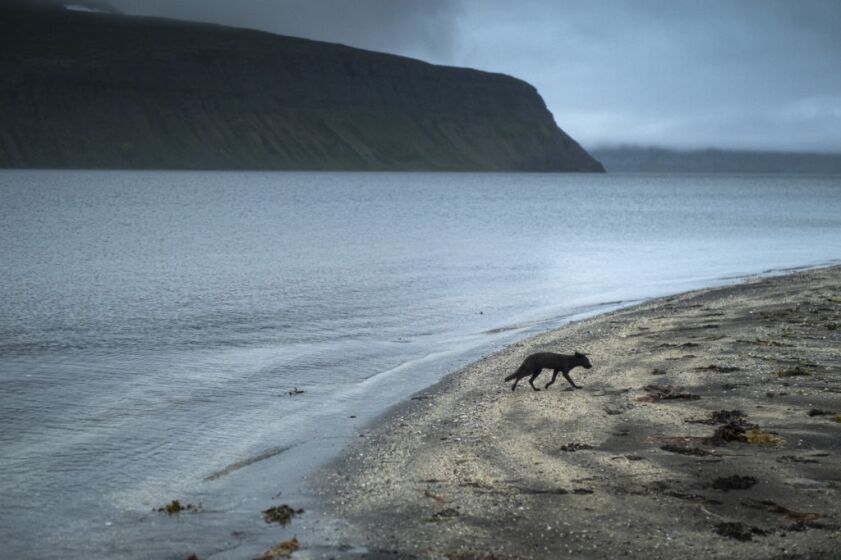
Taking place in 1883, this short and surreal story by the acclaimed writer Sigurjón Birgir Sigurðsson – better known as Sjón – follows two morally complex characters trying to survive in rural Iceland.
The first is a priest who is doggedly hunting down an elusive blue fox. The second is a herbalist forced to bury a young woman following discovering her in a shipwreck.
Throughout the events of the book, the changing nature of reality is a common motif, putting readers on edge as they too try to comprehend just what in the story is true, and what is conjured up in the imagination of its protagonists.
Critics describe the book as a piece of magical-realist fiction, and it earned Sjón the Nordic Prize for Literature in 2005.
5) Hotel Silence (2016) by Auður Ava Ólafsdóttir

Auður Ava Ólafsdóttir’s novel follows a divorced, forty-year-old man struggling with a midlife crisis as he travels through a war-ravaged Balkan country state. As readers soon discover, the reason for his being there is that he hopes to be killed, saving the possibility that his Icelandic daughter might discover his body should he commit the act at home.
Despite the heavy subject matter, the book is rife with lighthearted witticisms and tender reflections on what it means to be human. Hotel Silence is just as capable as being tragic as it is hilarious, intimate, and powerful.
Having published three novels and countless poems, Auður is one of Iceland’s most esteemed writers, having won many literary awards both at home and in France. In 2018, she received the Nordic Council’s Literature Prize for her work on Hotel Silence.
Two years after, Auður published another well-received novel called Miss Iceland that focuses on the conservative nature of 1960s Iceland, and a determined woman attempting to break the mould by becoming a writer.
6) I Remember You (2012) by Yrsa Sigurdardottir
A spine-tingling ghost story by acclaimed children’s and crime author, Yrsa Sigurdardottir. It follows three friends as they renovate an abandoned and isolated house. After a short while, it becomes obvious that something malevolent within the house is trying to make them leave.
As you can imagine, the permeating horror and eldritch themes in this novel does not make it suitable for young readers.
The central mystery of I Remember You creeps up slowly. A doctor in a nearby town uncovers how the suicide of his former patient began with an obsession she had with her vanished son. How these two seemingly unrelated events intertwine sets the scene for what becomes a truly terrifying read.
In the past, Yrsa’s penchant for horror has been compared to masters of the genre like Stephen King.
7) The Fires: Love & Other Disasters (2020) by Sigríður Hagalín Björnsdóttir
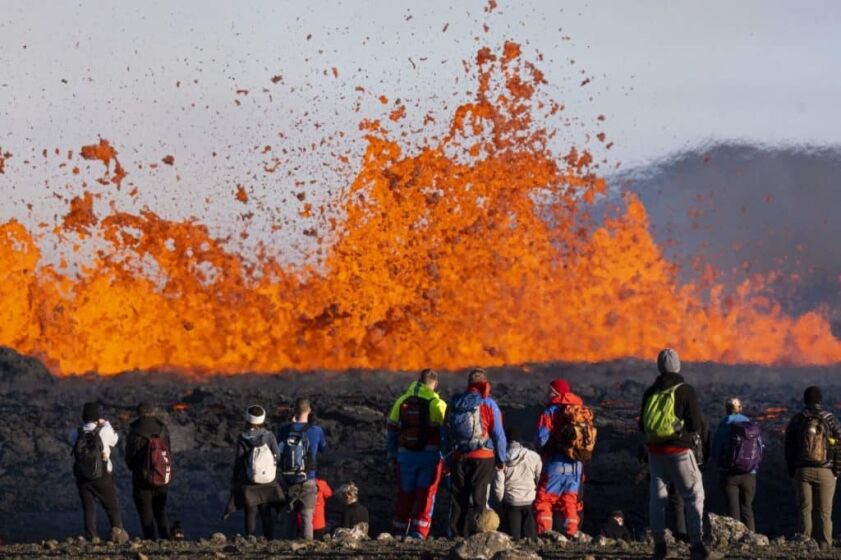
A sharp rise in earthquakes and eruptions demonstrate that Iceland is likely entering a new chapter of volcanic activity. These events have been limited to the Reykjanes Peninsula, and there is no indication that Iceland’s population is in danger.
Of course, those living on the peninsula – such as the former residents of Grindavík – have had their lives turned upside down. There is great sympathy both at home and abroad for how they have been affected. But still, the point remains. By and large, Icelanders remain safe from incurrent lava flows.
However, in the world of fiction, Sigríður Hagalín Björnsdóttir explores the worst case scenario. In her new novel, The Fires: Love & Other Disasters, she asks the question. What if Iceland was to be made unliveable by a catastrophic volcanic eruption?
The story focuses on a determined volcanologist named Anna Arnardóttir. As a true scientist, Anna places great importance on clear and rational thinking. She does so often at the expense of allowing personal feelings to cloud her views. But, as the threat of a large volcanic eruption threatens to destroy the Icelandic nation, she finds herself faced with another dramatic obstacle – love!
For those rare, but die-hard fans of romantic-disaster stories, Sigríður’s book is the perfect choice. Though it might make you irrationally fearful about Iceland’s molten underbelly, this novel contains plenty of fascinating science that will provide a clear understanding of the volcanic forces that characterise this island.
8) Öræfi: The Wasteland (2014) by Ófeigur Sigurðsson
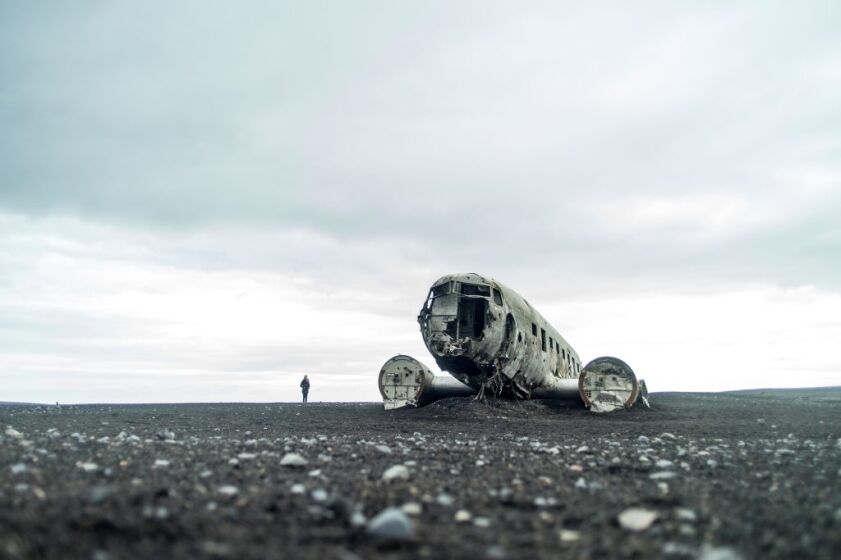
Once known as Litla Hérað (Little District,) Öræfi is among Iceland’s most barren regions. It has lain deserted since the violent 1362 eruption and glacial flooding at Öræfajökull volcano. As far as dramatic settings go, it is a fitting place. One that can serve as a blank canvas upon which the author can experiment with literary styles and influences.
In Icelandic, Öræfi translates to “desolation” or “wilderness.” While this might at first strike you as a somewhat bleak and depressing title, this expansive literary work is as filled with lighthearted comedic moments as it is profound drama and illuminating scientific theories.
The major event of the book is when its title character – an Austrian toponymist by the name of Bernharður Fingurbjörg – falls headlong into a glacier. However, given the interweaving threads that make up this epic novel, it’s an incident that almost seems inconsequential to the plot, but one that instead allows for Ófeigur to explore countless subjects and lines of inquiry.
9) The Woman at 1000 Degrees (2011) by Hallgrimur Helgason
The Woman at 1000 Degrees caused widespread and controversial coverage upon its release in Iceland in 2011 due in large part to the fact that many of its characters and events were taken directly from real life. Hallgrimur Helgason left a note at the beginning of the book stating what follows is a work of fiction. However, claims suggest that surviving family members do not appreciate the depiction of their relatives..
Scandals aside, this story is as enthralling as it is personal, strange, and quirky. It showcases Hallgrimur’s flair for writing in its most biting and unsentimental form.
As is often the case with Icelandic novels, the premise begins on a dark note. It is narrated in the first-person from Herra’s perspective.
She is an elderly woman nearing the end of her life. We begin by knowing that she has scheduled her own appointment at the crematorium. In roughly two weeks’ time, they will cook her body at a scalding 1000 degrees.
Hence the title of the book.
While waiting for this self-imposed finale, she recounts various experiences from her life. First we learn that she is the granddaughter of Iceland’s first President. She also once kissed a member of the Beatles. Her father fought in the Second World War on the side of Nazi Germany. She once married and was a mother to children. She even lived through the financial crash. We learn all this and more, right up until where we find her in the novel. Having mastered the internet and living in a small garage smoking endless cigarettes.
10) Heaven and Hell (2010) by Jón Kalman Stefánsson
Described as ‘Like an oyster – a glinting treasure in a rough shell,’ Heaven and Hell is the first book of Jón Kalman Stefánsson’s widely-lauded trilogy.
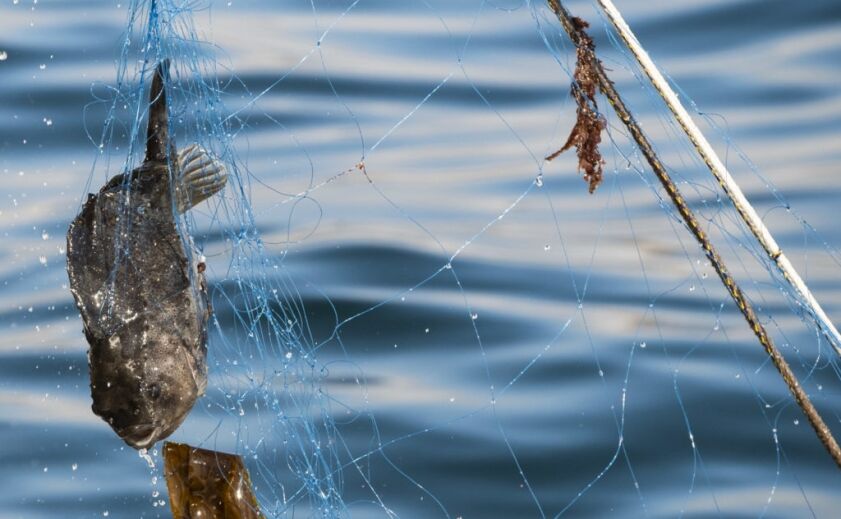
It is set in the harsh reality of 19th-century Iceland. This superb story explores how the tumultuous ocean relates to the lives and deaths of those who dare brave it. Fishermen struggle against monolithic waves. Tempestuous storms. And unruly companions as they fight to earn a meagre living.So, people compare the intensity of reading this novel to the drama and inhospitality of Iceland’s own coastal waters.
The novel’s protagonist – known only as ‘the boy’ – sets sail on a cod fishing boat with a strange crew. But he soon becomes disillusioned upon observing their callous reaction to a tragedy aboard the vessel. Abandoning his crewmates, he heads back to land. As expected, he is uncaring as to whether he survives the perilous journey or not. But once he reaches shore, he realises that circumstances are not much better there than they were at sea…
The next two books The Sorrow of Angels and The Human Heart continue to follow the story of the title character. Both delve into the interplay between the forbidding nature of Iceland and the stoic lives of those who endure it.
11) A Fist or a Heart (2019) by Kristín Eiríksdóttir
As Kristín Eiríksdóttir’s first novel translated into the English language, A Fist or a Heart makes for a fantastic introduction to one of Iceland’s most celebrated modern authors. Here in Iceland, she has been a huge name in the local literary scene since releasing a collection of short stories, Doris Dies, in 2010.
The main character of A Fist or a Heart is Elín Jónsdóttir, a lonely seventy-year-old woman who creates gruesome props for a theatrical company based in Iceland’s capital, Reykjavik. Aside from busying herself with work, Elín becomes increasingly interested in who she deems to be a fellow outsider. A young, upcoming playwright named Ellen Álfsdóttir.
As the story progresses, we as the reader learn that these two characters share many experiences. Troubled childhoods. Struggling to remain independent within their respective creative visions. And yet, the harder Elín attempts to unravel the parallels, the more her connection with reality wanes. This confusion lays the groundwork for an intricate and emotionally-astute novel. One that deals with themes of isolation and creativity on its own terms.
